I've wanted to get into brewing sours for a long time now but haven't been able to talk myself into it because I've always been 1 year within moving. I'll finally be moving somewhere somewhat permanent in 6 months, but until then, I still have the sour bug eating away at me.
Roselare or other commercial bug blends take a long time to get a delicious, sour beer but I just don't have that much time. What I do have is the experience of souring with lacto, and a lot of sour beers with dregs in them. My plan then is a combination of these techniques. I'm going to brew up a brown-ish ale base, sour it with lacto from grain, ferment with dry ale yeast and some dregs, then add dregs for the next 5 months until I move and bottle it up then.
Sour Brown
3.5 gallon
2.5 lb Munich 10L
2.5 lb Pilsner
2.5 lb Vienna
0.5 lb CaraAroma
0.5 lb C60
0.5 lb Wheat
1.5 oz Hallertauer (15 min)
US-05
Mash at 156F for 60 min. Save a handful of grain to pitch post mash at 110F and sour for 2-3 days. After souring is complete, bring to a boil for 15 mins to kill the lacto, get some IBUs from the hops and add DME to increase the OG if needed (when lacto sours, it lowers the gravity but doesn't necessarily add to ABV). Then I'm going to cool and pitch a pack of dry US-05 and some bottle dregs (most likely from Sierra Nevada/Russian River BRUX and a Russian River sour or Jolly Pumpkin sour). Then over the course of the next few months, anytime I drink a beer with bug dregs in it, I'll pitch it also.
OG 1.060
FG 1.015
IBU 19.9
ABV 5.9%
My goal for this beer is to end up with a nicely sour beer that isn't as one-dimensional as the berliners I make (not that that's bad, just different).
8/12/13: Brewday. Actual OG 1.071. More boil off then expected. Fermented in a swamp cooler. Pitched rehydrated yeast, lacto grain starter, BRUX dregs, Monk's Cafe Flemish Red and Petrus Oud Bruin dregs.
8/17/13: Pitched Boulevard's Saison Brett dregs, pellicle forming.
8/21/13: Pitched Jolly Pumpkin Oro de Calabeza for the last of my dregs. Some light spotty pellicle forming. Will re-visit in 3 months.
9/23/13: Huge white, powerdy pellicle formed. Gravity sample read 1.011. Tasted of a flemish red/oud bruin with some nice lingering sourness.
1/5/13: Tested gravity, 1.011. Despite what I have read about not bottling with this high of a gravity, I'm looking to bottle soon due to time constraints.
1/18/13: Bottled.
Tuesday, July 23, 2013

Saison
It's hot in Florida. It
says 92 on the thermometer but with the humidity outside it feel like 100+.
Since this weather will last until October/November, I wanted to brew up
something refreshing, crushable and with a decent ABV to help combat the heat.
Also, I wanted to do 3 gallons, but since I can't fit that in my mini
fridge, I need something that will be content with room temp fermentation
temperatures, ala a saison and the wonderful White Labs 565 which is suggested
to ramp up to 90F!
This
recipe is a mixmash of an award winning saison on HBT and then some different
ideas from Swamp Head's Saison du Swamp (very loosely).
Saison
3
gallon volume
5 lb
Pilsner
2 lb
Rye
0.5 lb
Flaked wheat
0.75 oz
Hallertau (60 min)
0.5 lb
Honey (5 min)
Mash at
148F for 90 min.
WLP 565
OG
1.064
FG
1.012
IBU
23.7
ABV
6.9%
I plan
on pitching as cool as possible (65F), then letting it free rise to ambient
(~74F). After 3-4 days of that I'm going to bump the temperature up by
adding a heating pad and try to get it to finish at a temperature up around
90F.
8/15/13 - Brewday. Actual OG: 1.068. Pitched WLP 565 around 70F and fermented in swamp cooler for 2 days. Put on heating pad 8/18/13.
8/15/13 - Brewday. Actual OG: 1.068. Pitched WLP 565 around 70F and fermented in swamp cooler for 2 days. Put on heating pad 8/18/13.
Wednesday, July 3, 2013
Berliner Weisse Treatments
I recently did a 3 gallon batch of Berliner Weisse, souring it by keeping it in a cooler at room temp with twice daily additions of boiling water. I fermented it in an ice bucket with washed kolsch yeast. I then split it three ways and did the following:
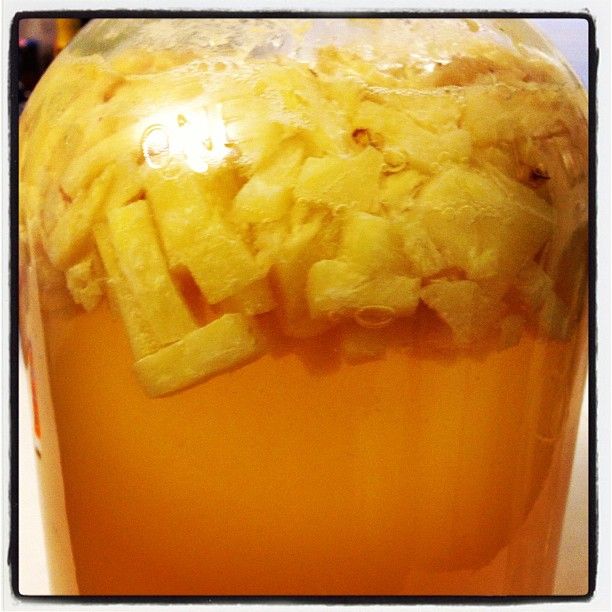
1 gallon with 1 pineapple cubed and frozen
1 gallon with 6 mangoes cubed and frozen
1 gallon with 3 packets of frozen passion fruit
They were left at room temp for a week and yesterday I tasted them and bottled them. The passion fruit is intensely aromatic and sour. Passion fruit is naturally very tart and along with the berliner base beer it is quite a mouth puckering experience. Pineapple gave off a great aroma but pineapple doesn't seem to lend itself well to giving off a great fruit taste as well. The best I can describe it is light. It has some pineapple fruit taste upfront but otherwise is a little muted. I think I got an infection in my mango batch because it has a harsh aroma. I might bottle it in a few days but for now I'm letting it ride.
Wednesday, June 26, 2013
Souring wort
So I was craving a Berliner Weisse and really wanted to brew one. I did a ton of research on HomeBrewTalk, through Google and I even emailed Funky Buddha in Boca Raton for info on how they did their Berliners (and he even got back to me!). There was a ton of info and even more opinions on how to sour a beer with the most common general themes as follows:
1. Souring the mash
2. Souring the wort
3. Souring with a pure lactobacillus culture
I looked into all of these methods and at the pros/cons of each. Souring the mash and souring the wort were similar in that both methods used lacto that is present naturally on grain to sour the beer. You mash in and once the mash is done you cool to 110-120F and pitch a handful of the grain then maintain it at that temperature until it reaches the desired level or sourness. I was a fan of souring the wort because it seemed a little easier to clean up and transfer then souring the whole mash. The downside to doing this is that you get a fairly one-dimensional sourness. It's basically just a simple tartness and not very complex which can take away from a beer. You can also develop some creamed corn/garbage aromas which may or may not clean up in the finished beer (mine mostly do).
Pitching a lacto culture provides a complex sourness and might provide a better overall experience but it can be frustrating to work with. The sourness takes awhile to develop, so if you're looking for a quick turnaround, this method isn't for you.
Because I like berliners and have zero patience, I sour my wort. My process which I've tried 5-6 times is as follows:
Once I drained my wort from my mash tun I put it into a bucket that I bought specifically for this lacto purpose. After it is cooled to 110F, I threw in a handful of grain (grain naturally carries lacto on it) and then put an airlock and lid on the bucket and put it in my fridge that I normally use for fermenting. I had put a light bulb in which I turned on and used as a heating source and it was kept insulated by the fridge, essentially creating an incubator. I maintained the fridge as close to 110F as possible because that is around the highest temperature that lacto likes to do its work without being killed (which occurs around 120F). As the wort began souring it gave off a creamed corn smell and when I took a sample it had a nice puckering sour. I was going for a big punch-you-in-the-mouth flavor so I soured it for 4 days.
I've tried variations of this method with these results:
4 days souring at 110F - way too sour, warhead level puckering, not desirable
4 days souring at 110F then blended 50/50 with fresh wort = perfect level of puckering tartness
6 days room temp 70F - lightly sour, gravity dropped drastically with minimal ABV contribution.
5 days room temp 70F with boiling water infusion 2x/day - slightly more sour, minimal off flavors, nice sourness and minimal gravity drop
My recommendations:
-Sour the wort for simplicity and quickness.
-Keep the wort as hot as possible for as short as time as possible to minimize off flavors.
-Don't fear the creamed corn/garbage smell!
-Put saran wrap on the top of the wort to minimize introduction to O2.
Tuesday, June 25, 2013
Sweet Stout
I'm looking to model a beer after Cigar City's Cafe Con Leche. Basically I'm looking for a sweet stout with a thick mouthfeel that I can add coffee to before bottling. Their head brewer talks about it here in this blog post with the most important thing being "a ridiculous amount of caramel malts". I went online to find some sweet stout recipes and then tinkered with them adding a heavy hand of caramel malts.
3 Gallon batch:
6 lb Marris Otter
0.5 lb Chocolate Malt
0.5 lb Dehusked Carafa III
0.25 lb Caramel 120
0.25 lb Caramel 80
0.25 lb Caramel 40
0.25 lb Caramel 20
0.75 oz EKG (60 min)
0.25 oz Columbus (60 min)
Mash at 158F. Sparge at 168F.
Ferment with WLP005 at 62F and let it rise.
46 IBU
OG 1.064
FG 1.029
Add coffee beans for 48 hours before bottling.
Pfriem Family Brewers
Pfriem Family Brewing out of Hood River, OR has an amazing tap room that I recently saw online. These tap handles are gorgeous and their serving tray for samplers is perfect. I'm stealing this idea one day!


Hogtown Brew-Off 2013 3rd Place!
I entered my Big Nose clone and Kolsch into the 2013 Hogtown Brew Off a few weeks ago and got back the results. I won 3rd in the Light Hybrid Beer category for my Kolsch! 38/50 and most had comments about a little more bitterness bite to the beer, but overall they liked it. One even said "if it was on tap I'd order it". Cheers!

Subscribe to:
Posts (Atom)